F1 · AI-ASSISTED MODE / CO-PILOT
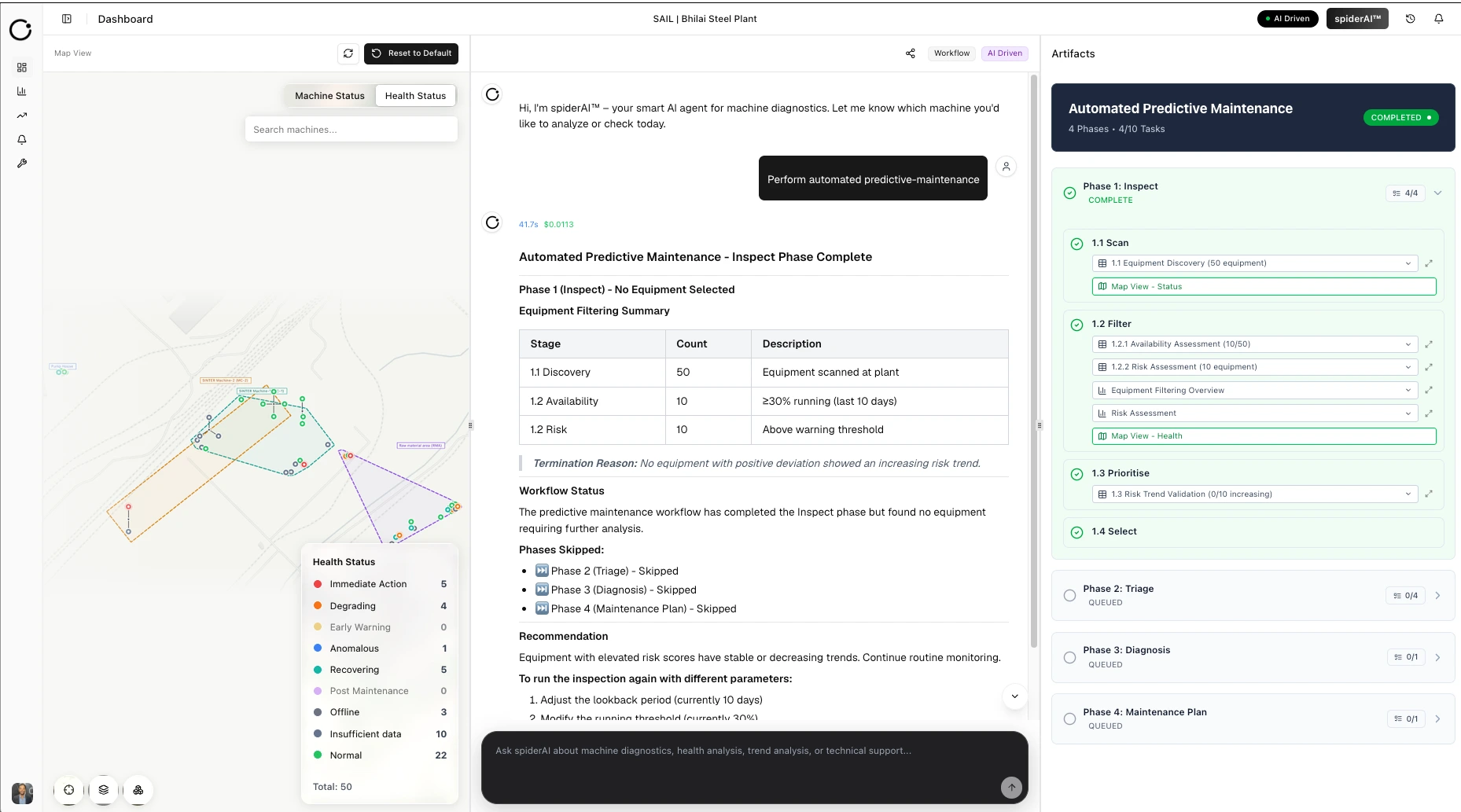
A conversation with your equipment.
Ask anything about a machine. spiderAI™ asks who you are and which area you hold, because the same question from an inspector, an area head and the site head has three correct answers. Every answer is cited to verified evidence, or names the gap and the document that would close it. Nothing is guessed.
F2 · INTEGRATED INTELLIGENCE REPORT WITH spiderAI™
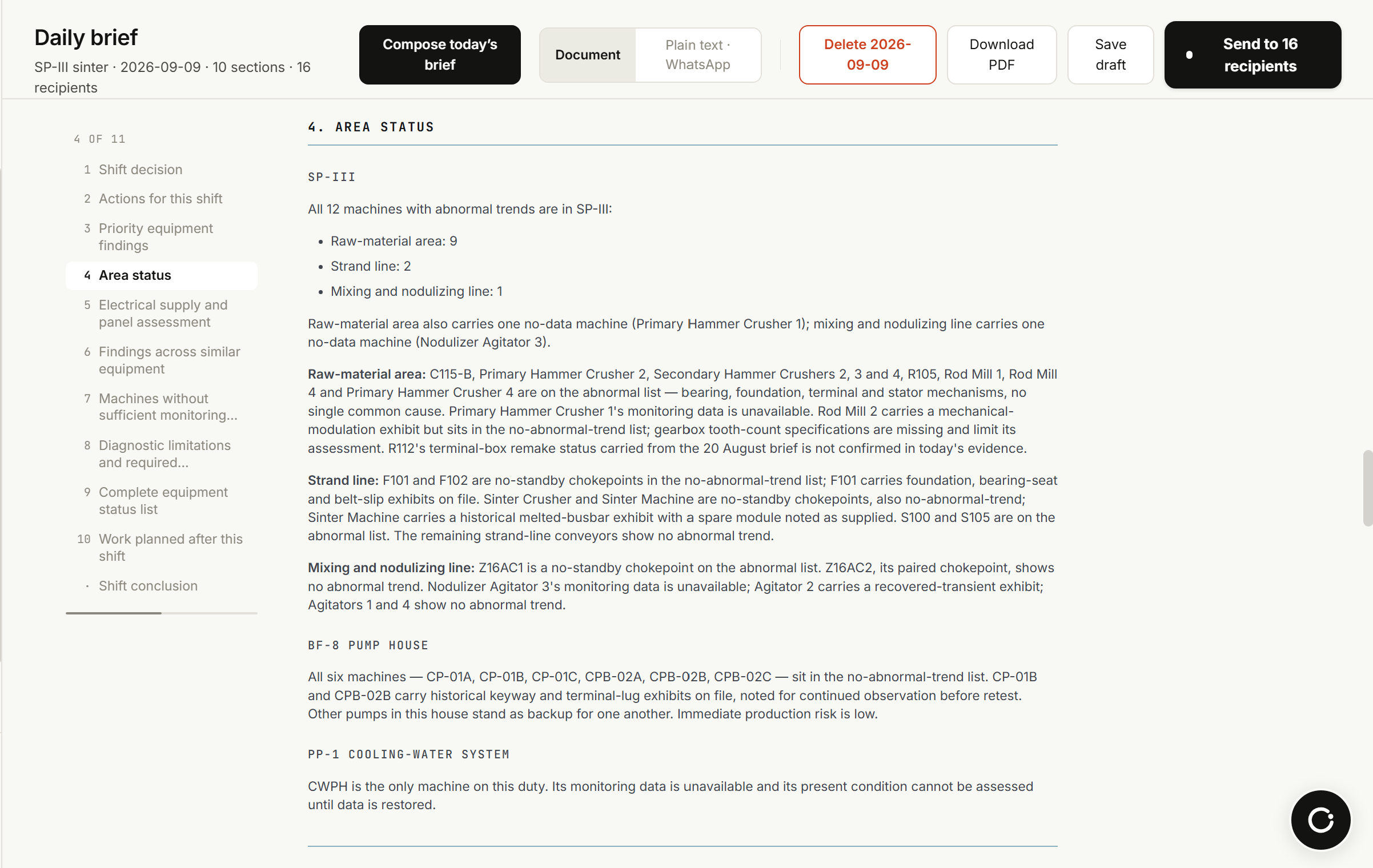
One report, for any machine, area or site, for any period, for the person who asked.
The daily equipment intelligence document, generated whenever you ask, for a machine, an area, a whole site or a fleet of sites; for today, this week, this month or this quarter; for one role or all of them. Generated from the context of that moment, not compiled from yesterday. View a live example.
F3 · AI-DRIVEN WORKFLOWS
Your written procedure, run by the agents.
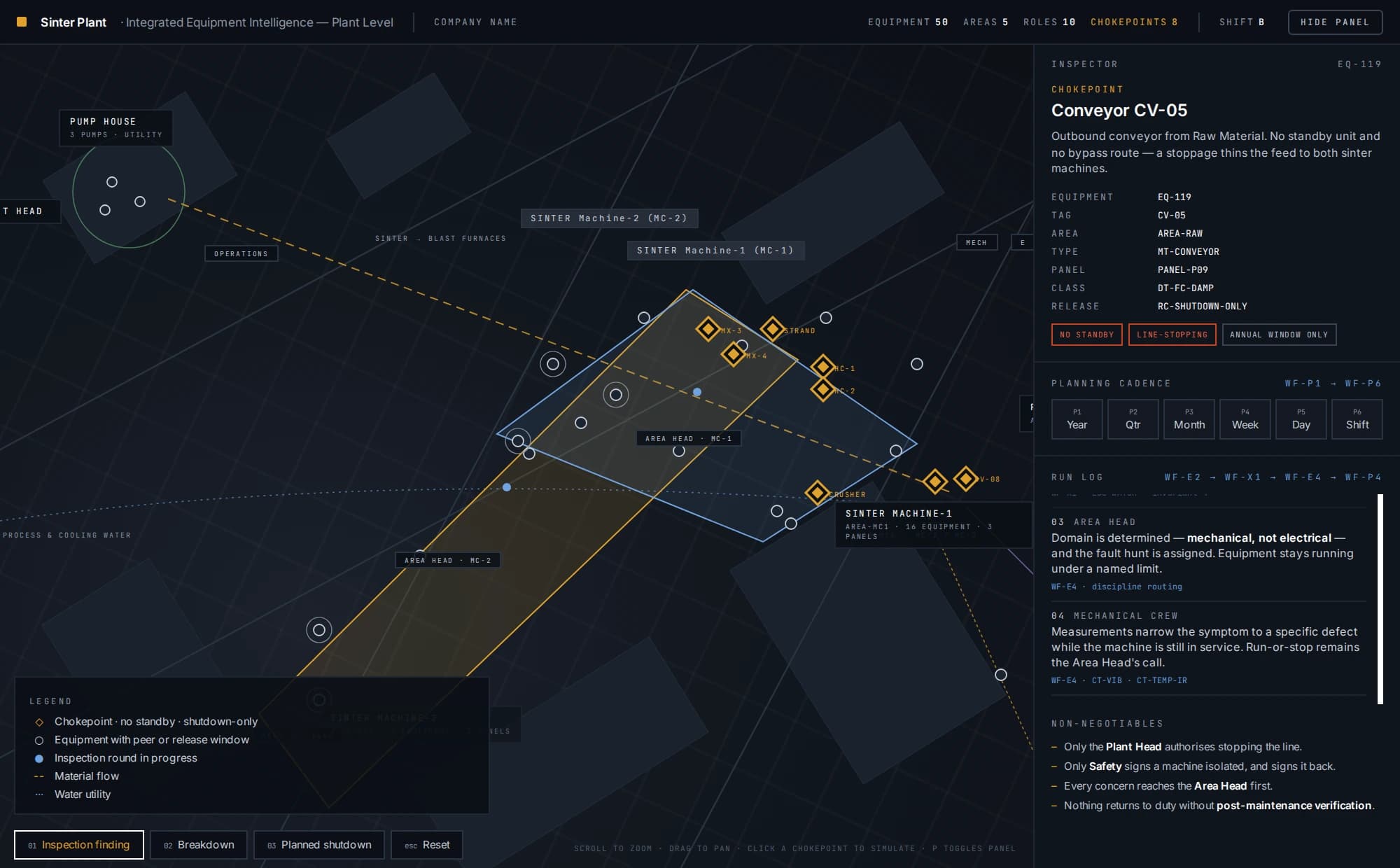
The operation’s own procedure becomes the workflow the agents run: a reading is trended, the panel beside it is checked, and the evidence reaches the seat that owns the concern with the moves open to them and what each costs. Routing, fault hunt, permit, repair, verification and return to service, with a person signing off at every step the operation wants a person on.
F4 · COLLABORATIVE WORKFLOWS
Every question opens a conversation, and the conversation stays open until the work is done.
A question opens a conversation. That conversation belongs to an episode, and the episode belongs to a session, so every contribution and field finding is kept together from the day the concern is raised until it is settled, and it counts toward the week, month, quarter and year. Each role sees its own inbox of open episodes and pending decisions, with who holds each and why. A step that is not yours comes back with the reason, and every refusal is written down.
F5 · ROLE-BASED INTELLIGENCE
The same question, answered for the seat that asked.
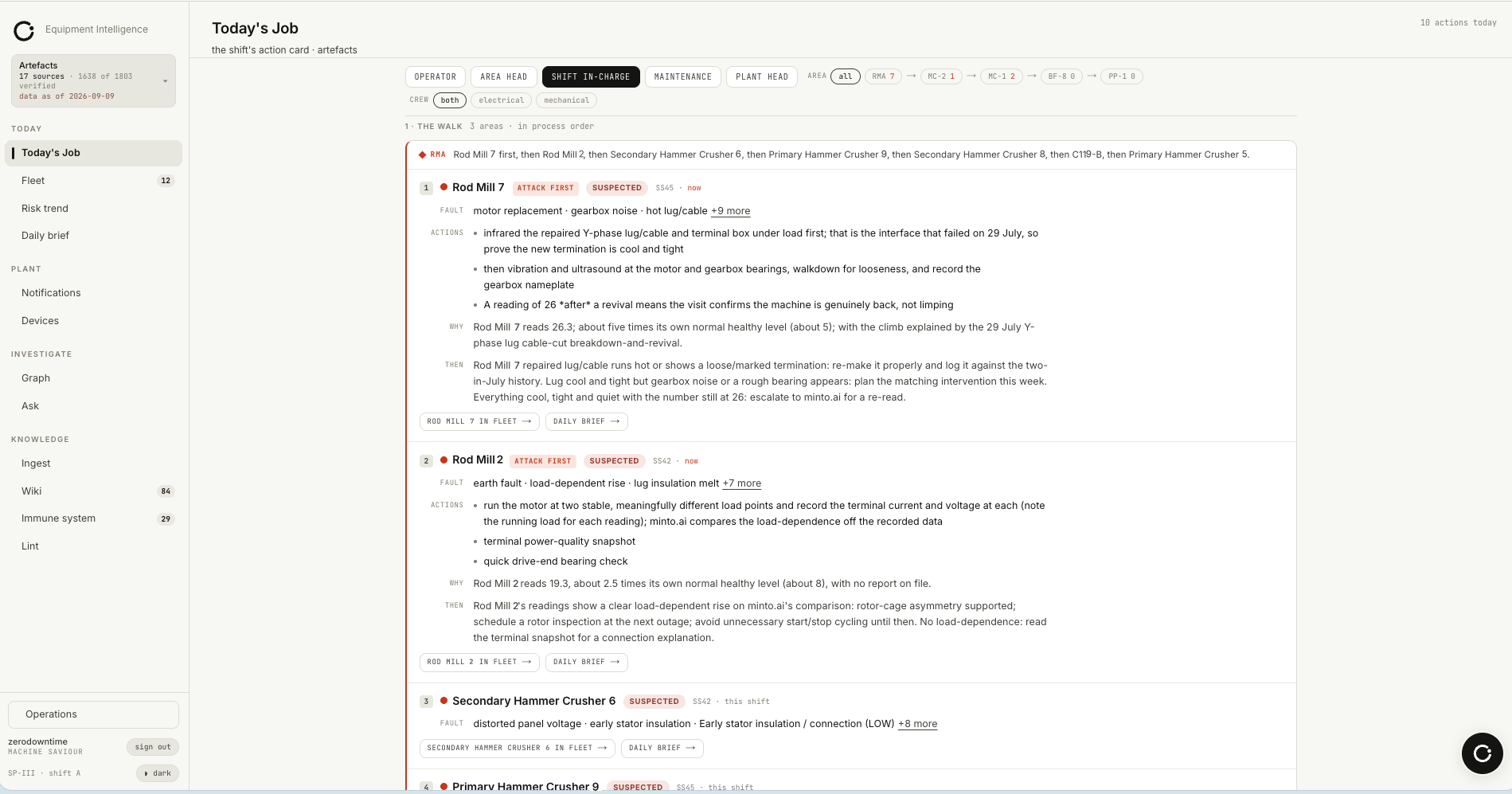
A site head gets the production response: run, run differently or stop. An area head gets a disposition with the moves and their costs. A reliability engineer gets the evidence and what was ruled out. A planner gets what waiting costs. A technician gets the job card. Safety gets readiness trended between tests.
F6 · FLEET-LEVEL INTELLIGENCE
Ranked by what it costs the operation, not by how bad one machine looks.
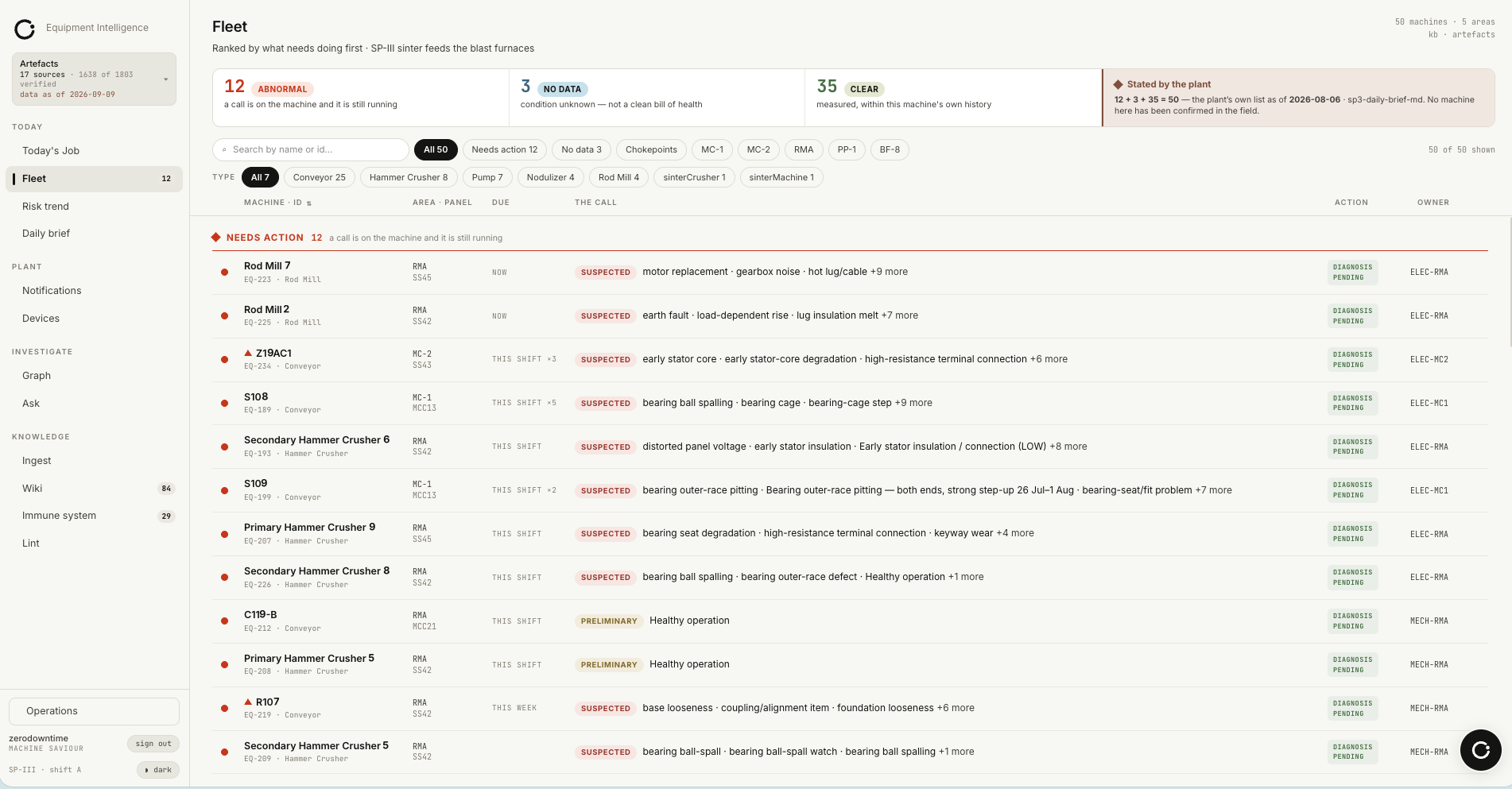
Findings are ranked by what they cost the operation, not by how bad one machine looks, and read across the panel, the area and the equipment type before anything is blamed. One view holds every machine under intelligence, what is standing, what is trending and what has no data at all.
F7 · INDIVIDUAL EQUIPMENT INTELLIGENCE
Every machine, in the context of the whole operation.
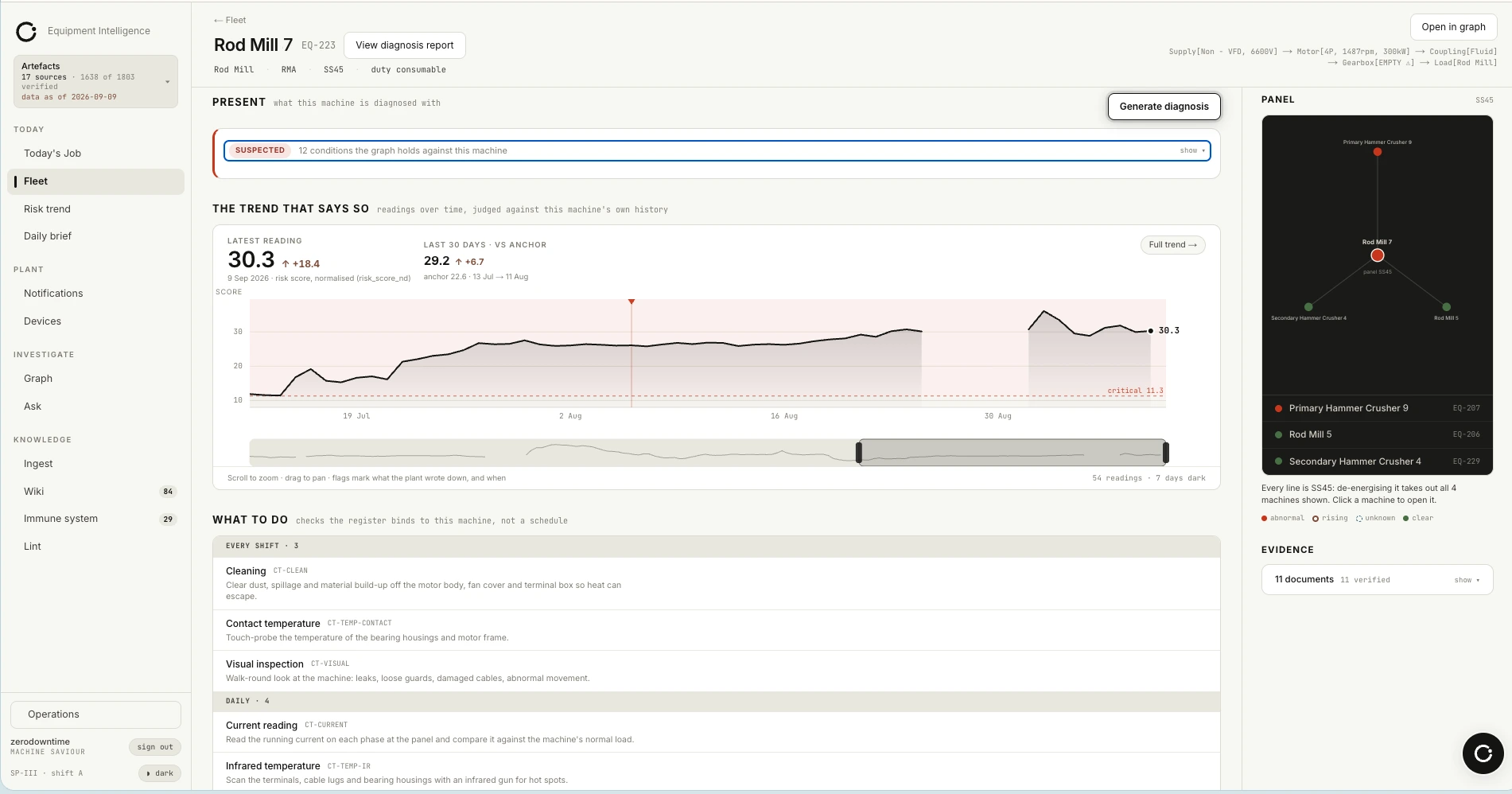
Open any machine and you see everything the operation knows about it: what it is, what it feeds and what feeds it, what it failed with before and what was found when it was opened, and the open findings on it ranked by what they cost the operation. Each finding opens into a job card: the causes still standing, the checks that separate them, and a place to record what was found.